Blog

  • What’s My Goal if Not a Certain Weight?

    What’s My Goal if Not a Certain Weight?

    There was a time in my journey that I didn’t dare set a weight loss goal. I knew it would become my focus, my god. And for me, that was God-led.

    Thinking about a “goal,” reminded me of this passage in Philippians 3: “Not that I have already obtained it or have already become perfect, but I press on so that I may lay hold of that for which I was also laid hold of by Christ Jesus. Brethren, I do not regard myself as having laid hold of it yet, but one thing I do: forgetting what lies behind and reaching forward to what lies ahead, I press on toward the goal for the prize of the upward call of God in Christ Jesus.

    God calls us to press on toward the goal—not of weight loss but of pursuing Him. The moment that we get our eyes off of why we do what we do, we need to repent and return to the One who has called us to this path.
    Rather than resenting this weakness in our lives—food addiction, diet addiction, body issues—we can embrace the struggle for the spiritual maturity it will bring when we strive for victory. We can’t do it on our own so as we lean into dependence on Jesus, we grow: “that I may know Him and the power of His resurrection and the fellowship of His sufferings.”

    This struggle we face has led us to greater knowledge of who God is. As we’ve suffered and pursued self-denial, not eating unless we experience genuine hunger, we experience His power. Can I get an amen? What we’re gaining spiritually far surpasses the pain we’ve felt!

    This path is a daily walk. There will be days that we realize we pursue God imperfectly. We listen to our appetite instead of our hunger. We eat to fill heart needs that only God in His grace can meet. But we repent and return and start again.

    “Not that I have already obtained it or have already become perfect, but I press on so that I may lay hold of that for which I was also laid hold of by Christ Jesus. Brethren, I do not regard myself as having laid hold of it yet, but one thing I do: forgetting what lies behind and reaching forward to what lies ahead, I press on toward the goal for the prize of the upward call of God in Christ Jesus.

    Paul implores us: “Let us keep living by that same standard to which we have attained.” It’s amazing to think that we’re becoming stronger, attaining new standards with every day of God-honoring choices. We’re not the same people we were when we started this journey. I hope you’ll enjoy the progress you’re making and the new level you’re living at now—even though you know you’ve got a way to go.

    Get ready for this! Are you ready? Paul writes and I would add “sisters” ““Brethren, join in following my example, and observe those who walk according to the pattern you have in us. For many walk, of whom I often told you, and now tell you even weeping, that they are enemies of the cross of Christ, whose end is destruction, whose god is their appetite, and whose glory is in their shame, who set their minds on earthly things.

    Aaaaa! See there it is! “Whose god is their appetite!” These people are “enemies of the cross of Christ”! God is calling us to not obey our appetite and to not set our minds on earthly things. Instead, God is calling us to set our minds on His Spirit! God is calling us to wait for the privilege of eating when we hunger—not eating every time we have a craving.

    Why? Because earthly things aren’t our focus…instead, heavenly things are our focus.

    “For our citizenship is in heaven,
    from which also we eagerly wait for a Savior, the Lord Jesus Christ;
    who will transform the body of our humble state into conformity with the body of His glory,
    by the exertion of the power that He has even to subject all things to Himself.”
    Philippians 3:20-21

  • Diet Addiction Is Idolatry

    Diet Addiction Is Idolatry

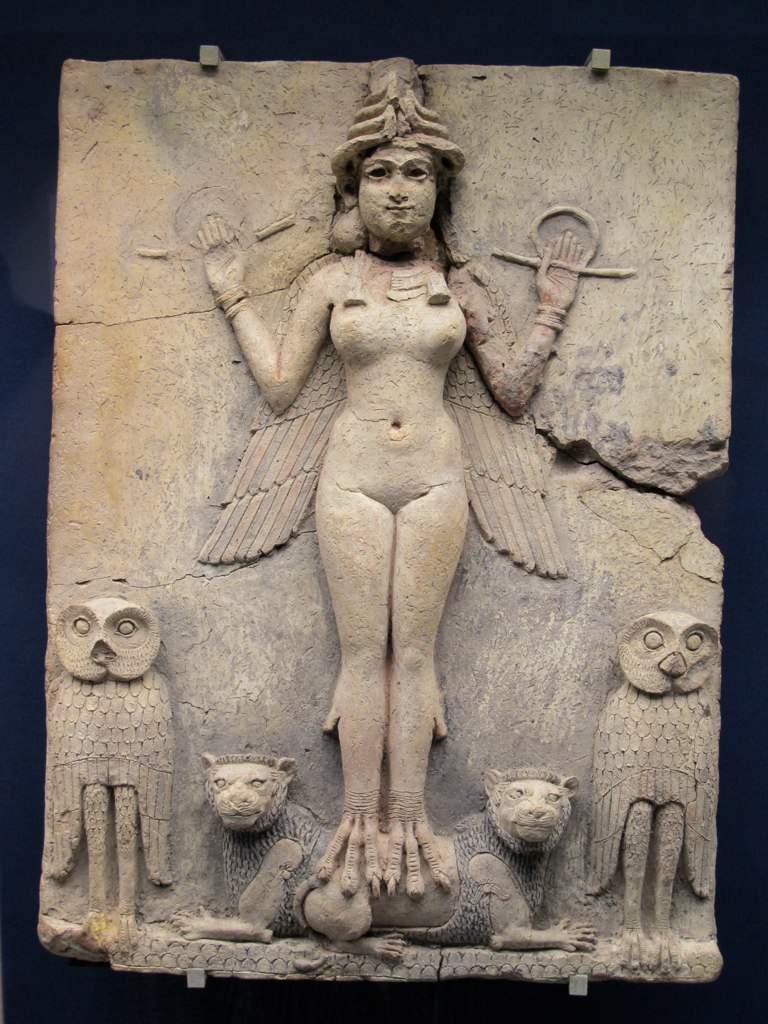
    A little shocked by that image? Yeah, I debated whether I should put it there. But why aren’t we shocked by this image?

    Diet addiction is a conspiracy straight from the pit of hell. There, I said it! And if we believe that, shouldn’t we look at every image like this with a little more discernment?

    Here’s what I believe: Satan has an army of demons that pose as idols because they want to take the worship that’s rightfully God’s and make it theirs. Each of these idols is tailor-made for people’s weaknesses, generational sin, and environmental shaping.

    Women are especially prone to diet idolatry. Here are some stats to support this view from livestrong.com.

    • Up to 50 percent of women are on a diet at any given time.
    • 35 percent of people who start by dieting occasionally become addicted to dieting.
    • As of 1990, the average dieting age for girls was 8 years old. That’s down from 14 in 1970.

    For women, diet idols lure us to follow them for weightloss, beauty, thinness…They appeal to our desire to fit the culture’s definition of outward beauty. They lurk to capture our hearts, our attention, our money, our worship. And some of us–at least 35% of us–get hooked, addicted, in bondage to dieting.

    And these idols go back for centuries. In Jeremiah 7, God dealt with His people’s idolatry, telling them they could dwell in His house if they did not “walk after other gods to your own ruin.”

    In particular, the people were worshipping a female idol. God said, “They gather wood, and the fathers kindle the fire, and the women knead dough to make cakes for the queen of heaven; and they pour out drink offerings to other gods to spite Me.” (Jeremiah 7:18)

    The women made cakes for the queen of heaven. Children gathered wood. Husbands kindled the fire. Women kneaded dough which takes lots of time and attention. The husbands were part of it, the children saw it modeled, and the women gave their focus to this idol.

    So…here’s a little history.

    According to the Ryrie Study Bible, “The flat cakes were probably in the shape of the goddess, the queen of heaven. The Assyro-Babylonian goddess Ishtar.” In fact, Jeremiah 44:19 says, “we made for her sacrificial cakes in her image and poured out drink offerings to her.”

    Ishtar was the Assyrian and Babylonian goddess of fertility, love, war, and sex. Demons don’t die. Ishtar still lives under a different name.

    These idols are still here among us, shifting and shaping to capture our worship. Hasn’t this Ishtar idol transformed herself into a diet goddess who promises beauty and attraction which leads to love and sex? Don’t we gather in our “temples” and pay our homage to this diet goddess? Don’t we give our money, time, attention to her? Don’t we place our hopes in the promises of deliverance–that in truth, only God can provide?


    We obsess over calories and points and grams. We obsess over burning calories. We obsess over the next great diet that’ll finally work. And we worship at the altar of false gods. Diet addiction is idolatry!

    Why do we continue looking to anyone or anything other than God? Take a look at these verses in Jeremiah 44:15-18 after God confronts His people for their idolatry.

    “Then all the men who were aware that their wives were burning sacrifices to other gods, along with all the women who were standing by, as a large assembly, including all the people who were living in Pathros in the land of Egypt, responded to Jeremiah, saying, “As for the message that you have spoken to us in the name of the Lord, we are not going to listen to you! But rather we will certainly carry out every word that has proceeded from our mouths, by burning sacrifices to the queen of heaven and pouring out drink offerings to her, just as we ourselves, our forefathers, our kings and our princes did in the cities of Judah and in the streets of Jerusalem; for then we had plenty of food and were well off and saw no misfortune. But since we stopped burning sacrifices to the queen of heaven and pouring out drink offerings to her, we have lacked everything and have met our end by the sword and by famine.” 

    Why do we continue to look to anyone but God? Because we’re focused on weightloss results and we don’t believe God can deliver! In essence, the people in Jeremiah 44 were saying, “We don’t get the same results we do from You, God, that we do from this idol so we’re sticking with her!”

    I believe it grieves God’s heart when we look to manmade diets to save us instead of looking to Him!

    Oh, and just in case, you’re a man reading this…the women threw their husbands under the bus in Jeremiah 44:19: “And,” said the women, “when we were burning sacrifices to the queen of heaven and were pouring out drink offerings to her, was it without our husbands that we made for her sacrificial cakes in her image and poured out drink offerings to her?” (So if God is revealing truth to you regarding these issues, dear man, you have a part in helping your wife follow what God wants.)

    This diet idolatry is not what God wants for His daughters (or sons). Once you begin to see these things, you’ll never be able to watch another diet commercial without sensing that it’s part of an evil system to steal away our hearts from the only true and living God.

    As you can tell, I feel very strongly about this. I lived for 40 years, walking after these false gods and becoming more and more in bondage to them.

    “You shall not make other gods besides Me;
    gods of silver or gods of gold,
    gods of paper,
    or gods of book,
    gods of websites or apps,
    gods of meetings,
    or gods of programs.”
    Exodus 20:23
    (CYJ version)


  • God Provides Our Food–Why That Matters

    God Provides Our Food–Why That Matters

    When my infant grandson is hungry, he must depend on others to feed him. He can’t drive to the store, buy his formula, make his bottle, and feed himself. He relies on those who love him to care for him. He’s completely dependent.

    When we’re hungry, we go to the store, make a meal, and feed ourselves. Or do we?

    I’m afraid that we’ve lost the connection to God who provides our every bite in our industrialized world. We rarely even see where our food is grown. And it can become easy to lose sight of the fact that we are completely and utterly dependent on God’s provision.

    Farmers and gardeners understand that there is only so much they can do to grow food. Then they must rely on God’s providence and care to send the rain, shine the sun, and bear the fruit. Do we understand this? I almost wonder if the enemy blinds us to the wonder of God’s provision so that it’s trivialized and not treasured. And then every meal is just not that special.

    Jacob understood this very clearly. When he blessed Joseph at the end of his life, he said…


    “God, before whom my fathers Abraham and Isaac did walk,
    the God which fed me all my life long unto this day.”
    Genesis 48:15

    “The God which fed me all my life unto this day!” Jacob understood that everything comes from God–every morsel, every grain, every sweet and savory bite.

    Do we understand this? Do we stop to thank God for our food–before, during, or after? I confess I don’t always do this. In fact, I often forget. But I want to grow in acknowledging how dependent I am on God for food by praying.

    It’s interesting to me that Jacob said “the God which fed me all life long unto this day” in his blessing to Joseph–the one God had chosen and led to plan and prepare for 7 years of famine in Egypt. Joseph surely understood that God is the one who feeds us! Jacob’s prayer was divinely led and teaches us the view we need to have regarding God’s provision: God feeds us all the days of our life.

    So what does this mean for us in our food and diet struggles?

    As we draw closer to God and learn more about who He is, we see His goodness and faithfulness in His provision. We understand that we are just a few seasons away from drought and famine. We understand that 20 million people in the world are on the brink of famine right now. We stop taking our food for granted and we trust God’s provision.

    How do we respond to this? Here are some thoughts.

    1. We stop eating out of fear. So often I have eaten when not hungry because I might get hungry later. Perhaps I’m going to church or into a meeting and don’t want to get hungry when I can’t eat, so I eat to prevent hunger. This is the wrong reason to eat. Remember, we eat out of hunger–not appetite or any other reason such as fear. Instead, I can choose not to eat and trust that God will provide what I need when I need it. Practically, I can pack a snack in my purse or take it with me into a meeting–just in case. On a more spiritual side, I can trust that I won’t die from a hunger pang and just wait for the next opportunity to satisfy my hunger.
    2. I walk in the belief that God is faithful. I remember that God has provided food whenever I do get hungry. I celebrate God’s faithfulness in His provision of food.
    3. I eat with gratitude. I acknowledge that I would have nothing without God feeding me every day of my life. I give thanks to God for His goodness.
    4. I pray for others. I don’t just read about the plight of millions who struggle for their food, I pray for God’s provision and mercy.
    5. I share. And I don’t just pray. I seek out organizations that provide relief to these famine-stricken areas and I give money to assist.
    6. I get closer to God-made food. Instead of eating chemicals and factory-made food that does make it more difficult to see God’s provision, I choose a diet that mostly consists of things God has made–gorgeous veggies, juicy fruits, succulent meats. whole grains bursting with nutrition. (This is a guideline, not a rule.) It’s hard not to marvel at God’s provision when we eat natural instead of “plastic” food.
    7. I let God redeem my struggle. I become part of the solution related to food issues in the world. I become an advocate for hungry children in my community.

    “Behold, as the eyes of servants look to the hand of their master,
    As the eyes of a maid to the hand of her mistress,
    So our eyes look to the Lord our God,
    Until He is gracious to us.”
    Psalm 123:2